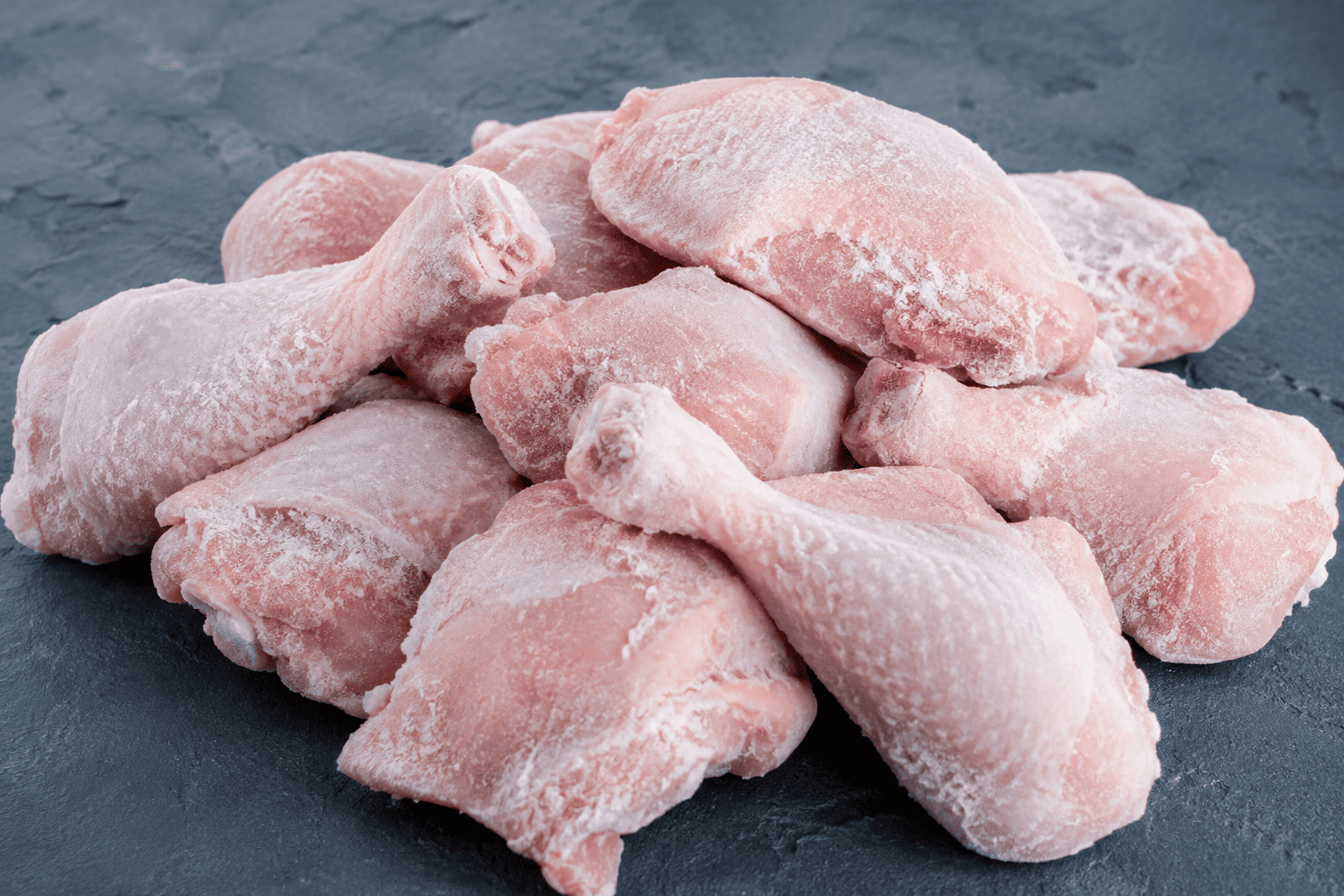
The global frozen chicken market is growing rapidly, and at the center of that growth is one segment that distributors, wholesalers, and food manufacturers cannot afford to ignore: frozen chicken. Whether you are sourcing for supermarket chains in the Middle East, food processors in Europe, or restaurant suppliers across Asia, understanding frozen chicken, what it is, how it is certified, and why it matters commercially is no longer optional. It is a baseline requirement for doing business in the modern food trade.
This guide breaks down everything a distributor needs to know before sourcing frozen chicken from a global supplier.
The word “Halal” is an Arabic term meaning "permissible" according to Islamic law. When applied to frozen chicken, it refers to a specific set of slaughter, processing, and handling requirements that make the product permissible for Muslim consumers.
For a frozen chicken product to be genuinely certified, the following conditions must be met during processing:
The bird must be alive and healthy at the time of slaughter. The slaughter must be performed by a Muslim who recites a dedication to God (Bismillah) before each cut. The bird must be killed with a single, swift cut to the throat that severs the jugular vein, carotid artery, and trachea simultaneously. Blood must be fully drained from the carcass before further processing. No pork, pork by-products, or cross-contaminated equipment may come into contact with the chicken at any point in the supply chain.
When these standards are met and verified by a recognized certification body, the product earns status and can be legally sold and labeled as in markets where this certification is required
The numbers alone make the case. There are approximately 1.9 billion Muslims in the world, representing nearly 25 percent of the global population. Muslim-majority countries in the Middle East, North Africa, Southeast Asia, and Sub-Saharan Africa represent some of the fastest-growing food import markets on the planet. In these regions, certification is not a preference, it is a legal and religious requirement that no supplier can bypass.
Beyond Muslim-majority markets, frozen chicken is now a mainstream product in markets like the United Kingdom, France, Germany, and the United States, where Muslim diaspora communities and health-conscious consumers who associate with ethical, clean food production are a significant and growing buyer segment
For distributors sourcing bulk frozen chicken for international trade, ignoring the segment means walking away from a market that is worth hundreds of billions of dollars annually and growing at a faster rate than conventional frozen poultry.
Not all certificates are created equal. When sourcing frozen chicken for markets in the Middle East or Southeast Asia, buyers need to know which certification bodies are recognized and accepted in their destination markets.
The most widely recognized bodies include the Islamic Food and Nutrition Council of America (IFANCA), the Food Authority (HFA) based in the UK, the Malaysian Islamic Development Department (JAKIM), the Indonesian Council of Ulama (MUI), and the Gulf Accreditation Center (GAC) for GCC countries.
For export into markets like Saudi Arabia, the UAE, Kuwait, and Qatar, buyers should confirm that the exporting country's certification is approved by the Gulf Accreditation Center or the importing country's designated religious authority. Failure to use an accepted certification body is one of the most common and costly mistakes distributors make when sourcing frozen chicken for the first time.
The frozen chicken trade covers a wide range of cuts that serve different end markets and applications. Understanding which cut to source for which market is part of what makes an experienced sourcing partner valuable.
Chicken feet are among the highest-demand products in East Asian markets, particularly China and Vietnam, where they are considered a delicacy. Demand is strong enough that Brazilian and European processors specifically separate and export chicken feet as a premium product.
Chicken wings are popular across Middle Eastern fast food chains, retail supermarkets in Africa, and food service companies globally. Grading by size and quality is important for this cut
Chicken thighs and drumsticks are the most commonly traded cuts globally, with consistent demand from food processors, retail supermarkets, and institutional buyers across Europe, the Middle East, and Africa.
Deboned chicken breast commands the highest price per kilogram and is primarily sourced by food manufacturers producing processed chicken products, ready meals, and protein-focused consumer goods
Whole griller chicken is in strong demand from retail supermarket chains across Africa and the Middle East, where consumer preference for whole bird products remains high.
Distributors placing their first order for frozen chicken from an international supplier should verify the following before committing to a shipment.
The certificate must be current, issued by a body recognized in the destination market, and cover the specific plant and product being purchased. An expired or plant-specific certificate that does not match the source facility is a compliance risk.
Cold chain documentation is equally important. A genuine bulk frozen chicken supplier should be able to provide temperature logs from the processing facility through to loading on the vessel. Any break in the cold chain can compromise product quality and create legal liability for the importer.
Product specification sheets including weight ranges per piece, glazing percentage, packaging format, and shelf life from date of production should be provided before the order is confirmed.
Payment terms for frozen chicken bulk orders are typically Letter of Credit (LC) or Telegraphic Transfer (TT). A reputable supplier will be comfortable operating under LC terms, which provide security for both parties.
At ARCOSAL, frozen chicken is one of our core commodity categories. We work directly with certified processing facilities in Brazil and Europe to supply the full range of chicken cuts, feet, wings, thighs, drumsticks, deboned breast, and whole griller, in Full Container Loads (FCL) to importers and distributors across Europe, the Middle East, and beyond.
Every shipment comes with full certification from recognized bodies, complete export documentation, product specification sheets, and temperature compliance records. We handle the sourcing, supplier vetting, quality checks, and logistics coordination so that our buyers receive exactly what they ordered, on time, to the right port of destination.
If your business is looking for a reliable frozen chicken exporter with the experience, certifications, and global sourcing network to meet your volume requirements consistently, we would be glad to discuss your sourcing needs.
Contact ARCOSAL today at info@arcosalbe.com or visit https://arcosalbe.com to learn more about our frozen meat sourcing capabilities.